

Energy Corps has released new research examining a central question in global development: What role does energy play in enabling sustained economic growth?
While energy is often discussed in terms of access, affordability, or transition, far less attention is given to its role at scale, particularly in supporting industrialization.
To better understand this relationship, Energy Corps commissioned EED Research Institute to analyze sustained growth episodes across multiple countries, including Vietnam, Ethiopia, Laos, and Guyana. This report, Energy as a Driver of Sustained Growth, represents the first research output from an Energy Corps–funded partnership.
Key Finding: Energy Scale and Growth Are Closely Linked
Across all case studies, the research identifies a consistent pattern:
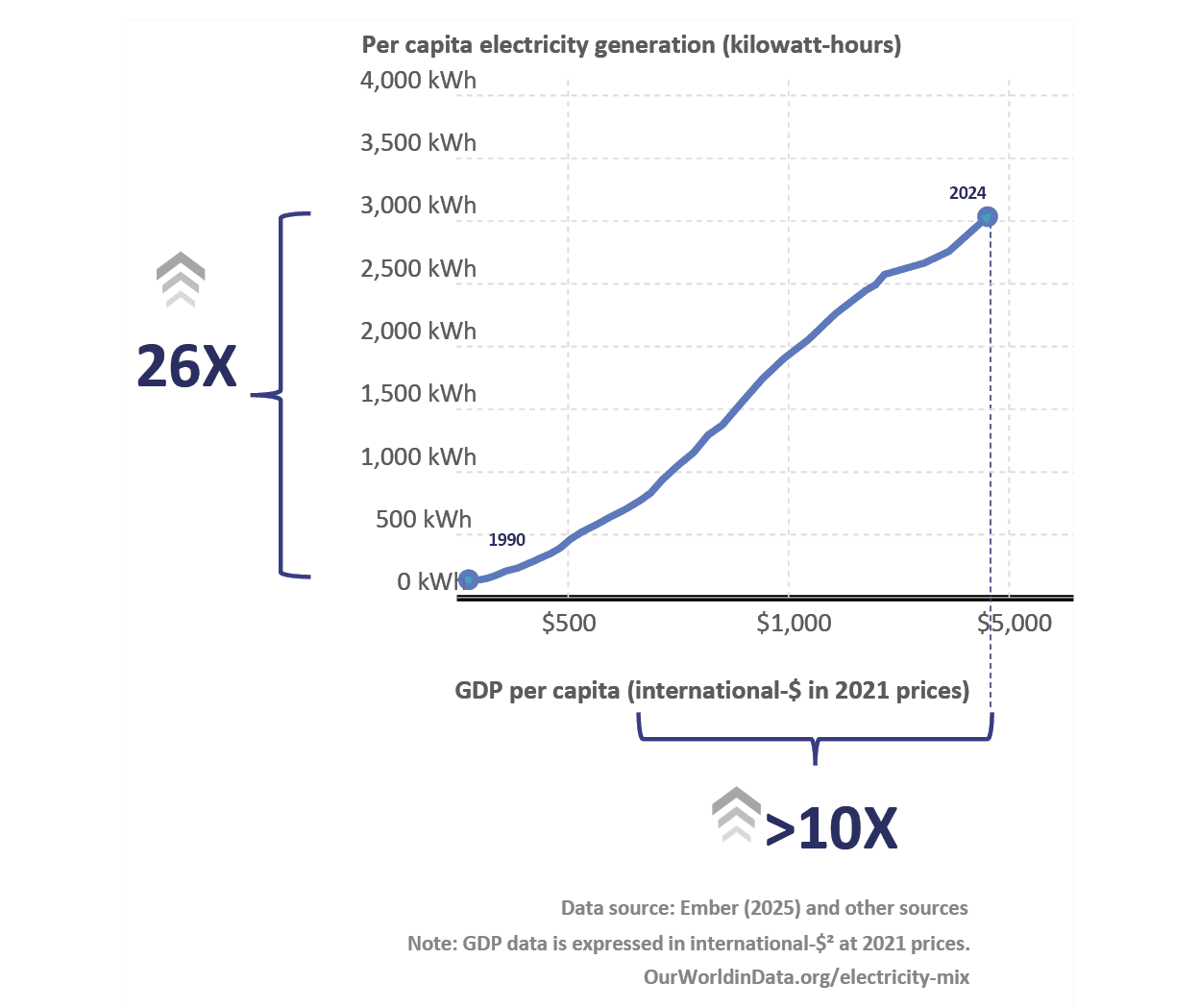
Sustained economic growth is accompanied by sustained growth in energy use.
Industrialization and energy expansion move together—not just through electrification, but through energy’s role in enabling productive economic activity.
Energy systems support:
Manufacturing expansion
Export competitiveness
Infrastructure development
Industrial productivity
The 10,000 kWh Development Threshold
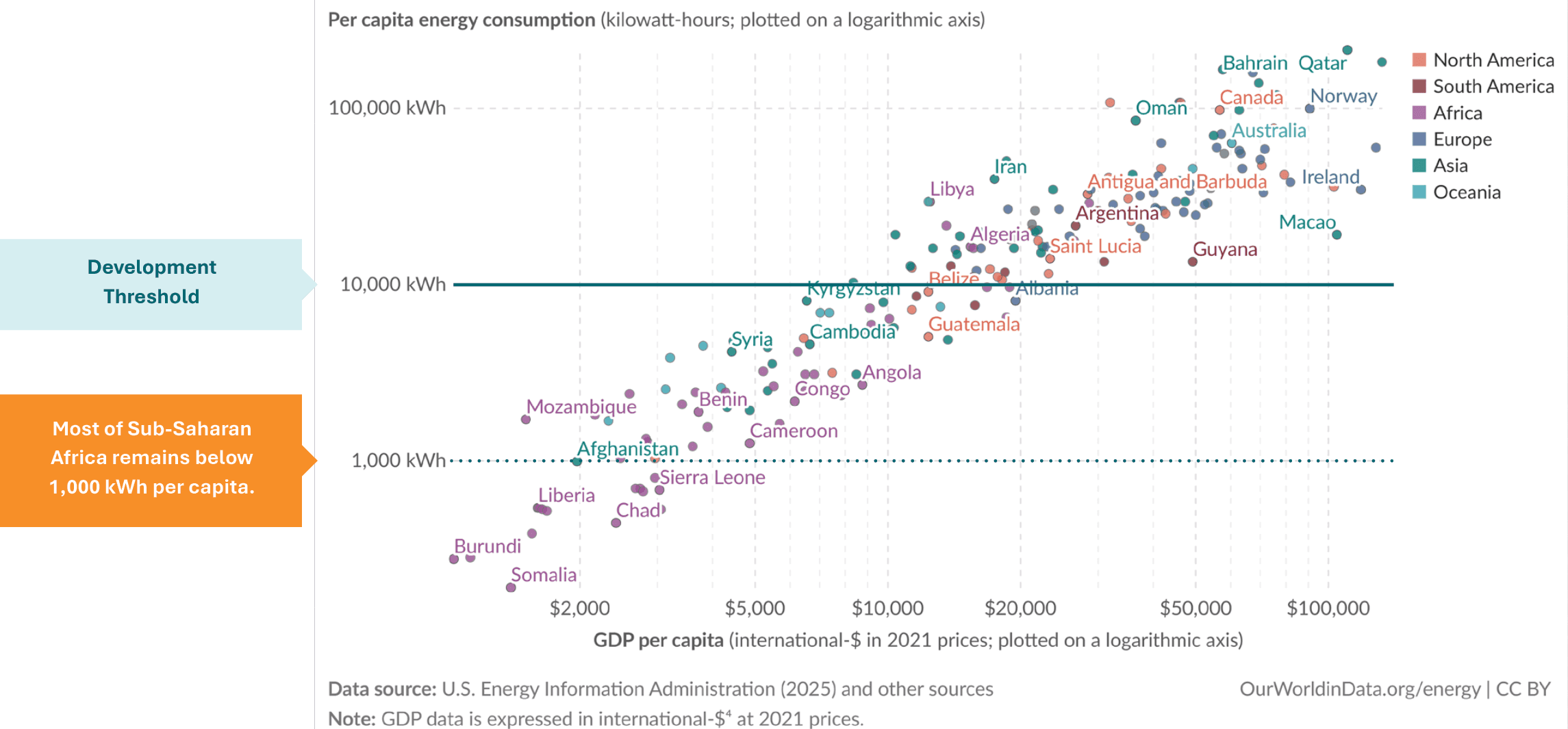
One of the report’s most striking findings is the emergence of a clear development milestone. Countries approaching ~10,000 kilowatt-hours of electricity consumption per capita tend to cross a structural income inflection point.
Below this level, energy scarcity constrains productivity and limits industrial expansion. Today, much of Sub-Saharan Africa remains below 1,000 kWh per capita—highlighting the scale of the gap.
No Single Pathway. But Common Requirements
While energy scale is necessary, countries follow different pathways to achieve it. The research highlights several models:
State-led industrial expansion (Ethiopia)
Export-manufacturing flywheel (Vietnam)
Energy-first export model (Laos)
Resource-driven growth with governance alignment (Guyana)
The key takeaway: Energy scale must be paired with effective institutions, policy alignment, and market conditions to translate into durable prosperity.
What Determines Success
The report identifies four categories that shape whether energy expansion leads to growth:
Structural preconditions
Policy and institutional drivers
Economic and market enablers
Infrastructure and social inclusion
These factors determine how effectively countries convert energy investment into long-term economic outcomes.
Why This Matters
For investors, the findings highlight large, underpowered markets as potential growth opportunities.
For policymakers, they reinforce that energy generation alone is not enough—industrial strategy, governance, and institutional capacity must evolve alongside energy systems.
For Energy Corps, the research reinforces a core thesis: Modern energy at scale is foundational to durable economic growth.
Interested in learning more? Listen to our Webinar, where the authors of the report presented their findings on May 28, 2026.
Share:

